
Acne & Acne Scar Treatment by Dr. Manisha Patil at Heal and Care Clinic
We treat acne and acne scars as a medical condition first and an aesthetic issue second. That means an evidence-based plan that addresses causes (hormones, sebum, bacteria, inflammation) and repairs the skin after the breakout settles. Dr. Manisha Patil leads a multidisciplinary approach combining World’s Best USA FDA-Approved topical and oral therapies, in-clinic procedures, and scar-remodelling techniques so you get clearer skin and a long-term skin-health strategy, not just a quick fix.

What is Acne & Acne Scarring?
Acne is an inflammatory disorder of the pilosebaceous unit: blocked follicles, excess oil, Propionibacterium/ Cutibacterium activity and inflammation produce comedones, papules, pustules, nodules and cysts.
Acne scars appear when deep inflammation damages dermal collagen. Scars are broadly classified as:
- Atrophic (depressed): ice-pick, boxcar, rolling.
- Hypertrophic / keloid: raised, fibrotic scars (less common on the face).
Early, targeted treatment reduces scarring risk; established scars require staged remodelling to improve texture and tone.
Our Approach
- Medical assessment: acne type, severity grading, hormonal screening (if indicated), medication history and skin mapping.
- Active acne control: topical retinoids, benzoyl peroxide combinations, short antibiotic courses where needed, hormonal agents (OCPs/spironolactone) for women, and supervised isotretinoin for severe nodulocystic disease.
- In-clinic inflammatory control: targeted intralesional steroids for nodules, professional extractions, blue light/photodynamic therapy for resistant flares.
- Scar remodelling (staged): microneedling ± PRP/PDRN, fractional lasers (non-ablative/ablative depending on skin type), subcision for tethered rolling scars, TCA-CROSS for ice-pick scars, dermal fillers for deep volume loss, and punch excision/grafting for select deep lesions.
Who Is an Ideal Candidate?
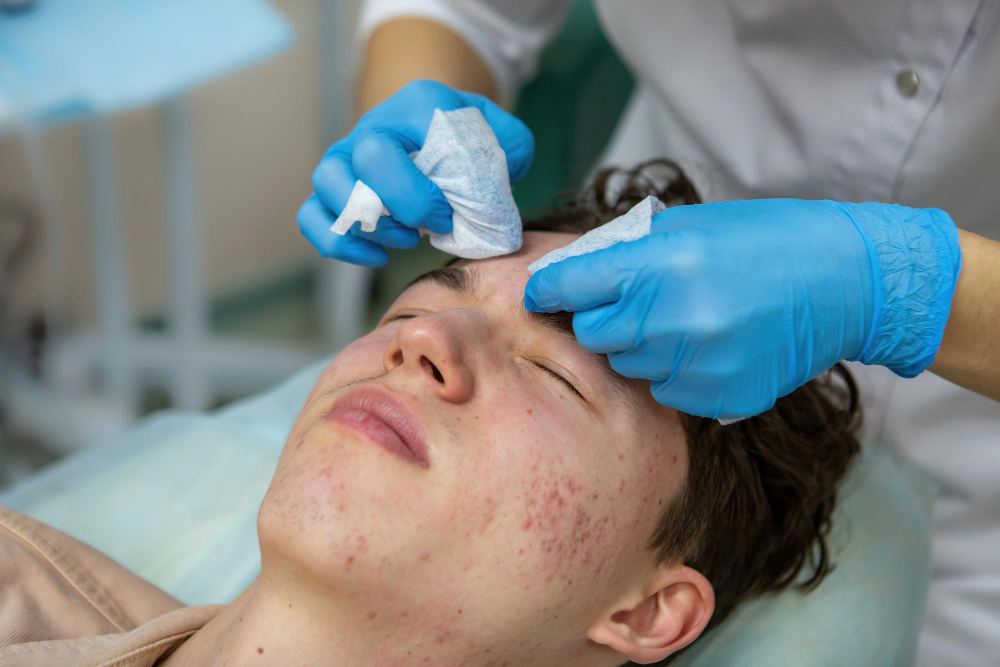
- Anyone with persistent inflammatory acne, recurrent flares or post-acne scarring who wants a medically supervised plan.
- Teens and adults: acne in adulthood often needs hormonal evaluation.
- Those prepared for a staged plan, active control first, scar treatment once inflammation is quiescent.
We do not treat pregnant patients with certain systemic agents, all systemic options are discussed with safety and monitoring in mind.
Sample Packages
Acne Control Starter
consultation + 3 months topical & oral regimen with 2 follow-ups.
Acne + Scar Roadmap
acne control phase (medical therapy) followed by 3 microneedling+PRP sessions and 1 laser session.
Advanced Scar Remodel
planned subcision + RF/microneedling series + fractional laser and filler touch-ups.
Hormonal Acne Pathway
endocrine review, tailored oral contraception/anti-androgen plan, plus maintenance therapy.



Post-Treatment Care
Do
- Use prescribed cleansers and topical agents as advised.
- Wear broad-spectrum sunscreen daily, critical after lasers/peels.
- Keep follow-up appointments for medication monitoring and adjustments.
Don’t
- Pick or squeeze active lesions, increases scarring risk.
- Use strong exfoliants or start new actives immediately after procedures unless cleared.
- Skip contraception counselling if systemic retinoids are planned (isotretinoin is teratogenic).
What to Expect
- Consultation & baseline: documentation, severity grading, and a personalised plan.
- Acne control phase (weeks to months): expect 6 to 12 weeks to see major improvement with topical/oral regimens; isotretinoin courses are usually 4 to 6 months when indicated.
- Stabilisation: once breakouts reduce for 3 months, scar-remodelling begins.
- Scar treatment phase (months): treatments are staged, microneedling/PRP courses, laser sessions, or procedural subcision scheduled per scar type.
- Maintenance & follow-up: periodic review, topical maintenance and lifestyle guidance.
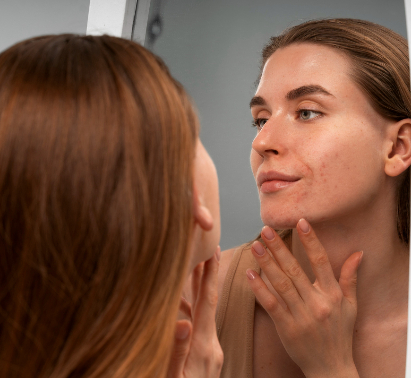
Typical Sessions & Timelines
- Topical/oral therapy: review every 4 to 8 weeks initially.
- Phototherapy / PDT: 4 to 6 sessions depending on response.
- Microneedling ± PRP: series of 3 to 6 sessions, spaced 4 to 6 weeks.
- Fractional laser: 1 to 3 sessions (non-ablative) or 1 ablative session with longer recovery for deep scarring, tailored for skin type.
- Subcision/TCA-CROSS/punch excision: single or staged procedures with healing intervals.
Visible improvement often begins within 6 to 12 weeks, scar remodeling continues for 6 to 12 months after procedures.
Why Choose Heal and Care Clinic for Acne & Scars
Dr. Manisha Patil personally directs acne protocols and scar strategies, integrating medical and procedural options. For women, care is fertility- and hormone-aware, combining endocrine review with aesthetic planning for safe, coordinated treatment. We follow an evidence-based, staged approach—treating active disease first, then remodeling scars—to improve safety and outcomes. Advanced modalities, including microneedling with World’s Best USA FDA-Approved PRP/PDRN, fractional lasers, TCA-CROSS, subcision, and fillers, are all available under one roof. Progress is measured with baseline photography, objective scoring, and documented review at each step.
What Are You Waiting For?
Book Your Appointment Today!
Say Goodbye to Acne & Acne Scars!
Ready to clear your skin and fade those scars? Book a consultation with Dr. Manisha Patil and the team at Heal and Care Clinic today for clearer, smoother, and more radiant skin!
FAQ's
Many patients achieve long-term control or remission with personalised medical therapy; some need ongoing maintenance.
It’s very effective for severe acne but requires strict monitoring and pregnancy prevention, we manage this closely.
Scars can be significantly improved; complete erasure is unlikely, but a combination approach often produces dramatic, natural results.
After inflammation is controlled, commonly 3 months of quiescence, scar procedures are safer and more effective.
We choose scar and laser protocols carefully and precondition skin when needed to reduce pigment risk.
Inflammatory control shows change in 6 to 12 weeks, scar remodeling builds over months.